Guest lecture: The symbolic politics of Memory and Identity in modern Armenia (1990-2025)
Lecture by Prof. Suren Zolyan (Erewan)
Time: Monday, 21 September 2026, 17:00
Venue: Österreichische Akademie der Wissenschaften, Georg Coch Platz 2, 1010 Wien (Seminarraum 4. Stock, barrierefreier Zugang über Wiesingerstraße 4)
Online participation is possible, please contact Johannes.Preiser-Kapeller@oeaw.ac.at
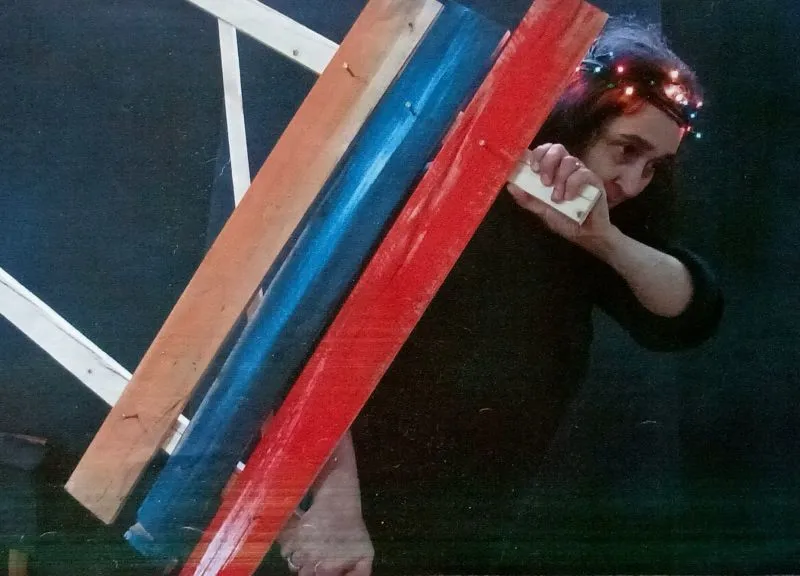
Organised by the Österreichisch Armenische Studiengesellschaft, the Language Culture Cognition Lab (OEAW) & the FWF Cluster of Excellence EurAsian Transformations


Online participation is possible, please contact Johannes.Preiser-Kapeller@oeaw.ac.at
Abstract
We address the semiotics of conceptual shifts in the dominant discursive political and sociocultural practices of the Post-Soviet Armenia. The political history of independent Armenia is expressed through dominant political symbols and concepts, with a heterogeneous mixture of mythologized ancient history, Soviet and anti-Soviet ideologies. Attempts to create new symbols or re-interpret old ones led to significant transformations in the main discursive practices, which could form the foundation for the legitimization of the Armenian political identity. In general, if we depart from the substantive aspects, semiotic operations are governed by two main transformational principles recursion and inversion, precisely those that Levi-Strauss described in relation to myth. At the same time, different cycles of this process can coexist in the same socio-cultural space. The political post-Soviet history of Armenia is divided into four periods, each of which is associated with a specific political regime (1990-1998; 1998-2018; 2018-2020; 2020- up to present). Each of them gives rise to different political myths, both dominant (official) and oppositional, but in general, they are all based on the basic vocabulary that was formed in the late 1980s and early 1990s. Therefore, from the point of view of symbolic conceptual patterns, they are all based on the transformation (negation, inversion, and recursion) of the previous stages. Thus, the initial stage was characterized by a revaluation of values: everything Soviet was to be denied, and the Republic of Armenia of 1918-1920 was considered as a model. However, the new authorities intended to establish themselves through the myth of the creation of a fundamentally new - namely, a political nation, therefore, a tension has emerged between the concepts of reincarnation and creation. Soviet Armenia is contrasted with non-Soviet Armenia, which is then split into two opposed concepts: the First vs the Third Republic. Then their “reconciliation” took place. It is reflected in the metanarrative of the Three Republics, and the Soviet Armenia occupies a worthy place as an intermediate link from incomplete to full-fledged independent statehood In the 1990s, primordial narratives were revived, asserting the immutability of Armenia, starting with the legendary progenitor Hayk. At present, there is an obvious attempt to create the concept of the “Fourth Republic” based on the negation of the previous ones, up to the rejection of the Declaration of Independence as a Soviet legacy and the annulment of previous symbols (the coat of arms, the anthem, the Mount Ararat) and oriented to construct the new “Real Armenia”.
This study was carried out within the framework of the research project “Cognitive, communicative, and semiotic mechanisms of the formation of historical memory and national identity: a transdisciplinary analysis of the Armenian epic, historiography, urban space, and political discourse,” supported by the Higher Education and Science Committee of the Republic of Armenia (Grant No. 21AG-6C041)
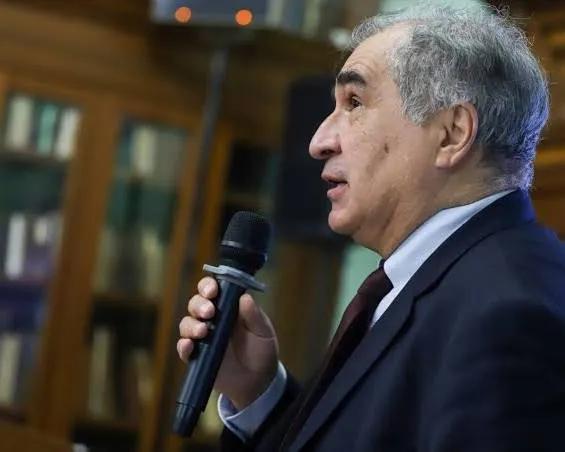
Prof. Suren T. Zolyan (1955) received his doctorate in philological science. He is the author and editor of more than 300 scientific works in the fields of General Linguistics, Semantics, Semiotics, Poetics and Political Science. At present, Suren Zolyan is the Principal Investigator of the research project “Conceptual, communicative, and semiotic mechanisms of the formation of historical memory and national identity”identity”(Project No 21AG-6C041) supported by the Science Committee of the Republic of Armenia. Besides academic activities, Suren Zolyan was a member of the first Parliament of independent Armenia (1990-1995). He later served as a member of the National Commission on Human Rights (1997-2004), Rector of the Yerevan State Linguistic University (1997-2012) and a member of the Committee of Experts of the European Charter for Regional or Minority Languages (2003-2015).
https://sci.academia edu/SURENZOLYAN
https://www.researchgate.net/profile/Suren_Zolyan

